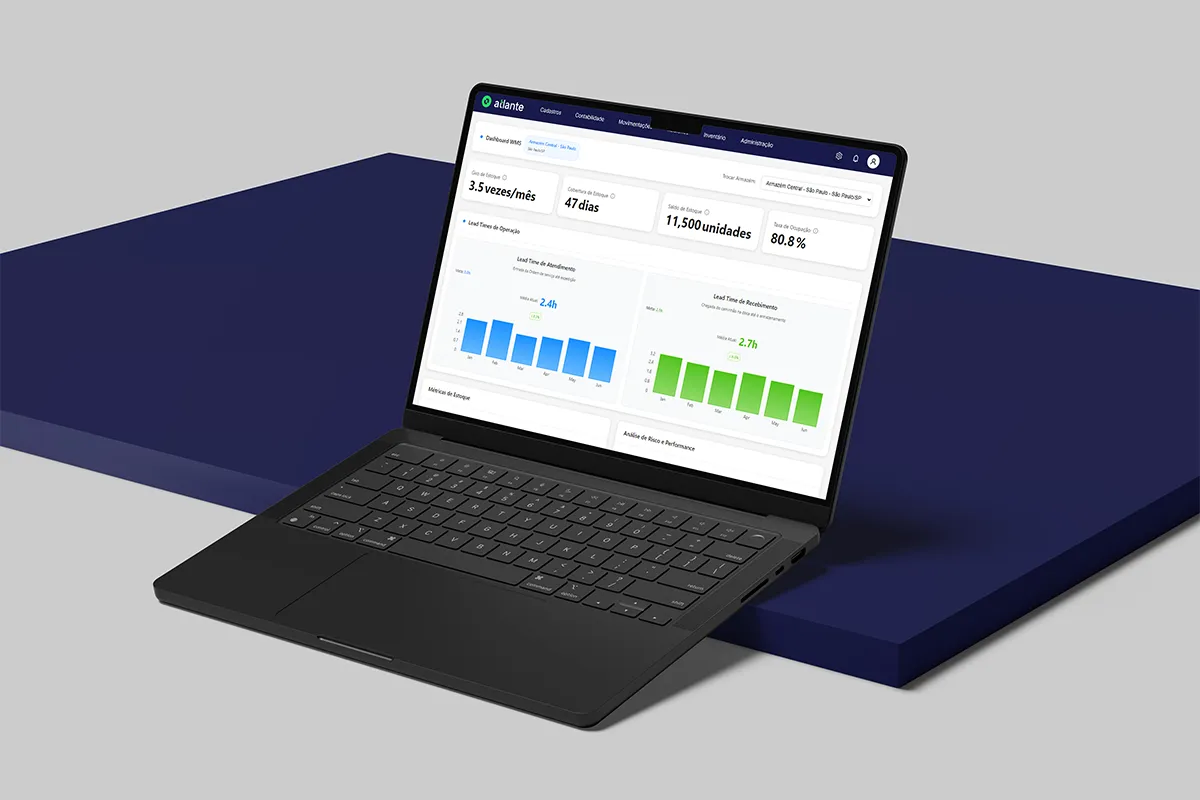
When a warehouse begins facing inventory errors, slow picking, recurring discrepancies, lack of traceability, and rising operational costs, one question appears fast:
“How much does a WMS cost?”
A Warehouse Management System (WMS) is one of the technologies with the highest ROI in logistics, but pricing varies massively depending on warehouse size, automation level, and vendor category.
Most guides on the internet give generic numbers. This one doesn’t.
Here you’ll find the real, updated, market-based pricing—from small SaaS systems all the way to SAP EWM and Manhattan Active, which can cost millions.
Let’s break it down with total clarity.
What Is a WMS (and Why This Matters for Pricing)?
A WMS manages and optimizes every warehouse process:
- receiving
- putaway
- storage
- picking
- packing
- inventory
- replenishment
- shipping
- full traceability
The more complex the operation and the higher the level of automation, the more expensive the system must be — not because of the software itself, but because of integration, configuration, scalability, and SLA.
How Much Does a WMS Cost? (Straight and Real Answer)
Small to Medium SaaS WMS
US$ 300 to US$ 1,200 per month
(Low complexity, small e-commerce DCs, light operations)
Mid-Market WMS (3PL, Multi-Process)
US$ 1,500 to US$ 6,000 per month
(20–60 users, 1–3 warehouses, multi-stock, higher complexity)
Enterprise-Level WMS
US$ 7,000 to US$ 30,000+ per month
(Multi-CD, automation, large SKU volume, multiple companies)
High-End Enterprise (SAP EWM, Manhattan Active, Blue Yonder)
US$ 30,000 to US$ 150,000+ per month
(Global networks, massive warehouses, robotics, and deep compliance)
These numbers are REAL — based on enterprise deployments in 2023–2025.
Implementation Costs (Realistic Numbers)
Software subscription is just one part.
Implementation is the real investment, especially in enterprise environments.
Small WMS Implementation
US$ 3,000 – US$ 12,000
(quick setup, few integrations)
Mid-Market Implementation
US$ 15,000 – US$ 60,000
(process mapping, ERP connections, multiple picking strategies)
Enterprise Implementation
US$ 80,000 – US$ 300,000
(multi-CD, automation, governance, complex validation)
SAP EWM / Manhattan Active / Blue Yonder
US$ 500,000 – US$ 5,000,000
Yes, millions.
Large global projects often take 18–36 months, with several teams involved.
What Determines the Price of a WMS?
1. License Model
Per user, per warehouse, per transaction, or fixed subscription.
2. Operational Complexity
Multi-company, automation, picking types, batch processes, etc.
3. Integrations
ERP, TMS, robotics, conveyors, sorters, marketplaces, custom APIs.
4. SLA & Support Level
24/7 support, uptime guarantees, on-site presence.
5. Implementation Scope
More complexity = more consulting hours.
6. Customization Needs
Custom apps and workflows can double or triple the cost.
How Much Money Does a WMS Actually Save?
Here are real-world improvements measured in U.S. operations:
- Inventory accuracy: +60% to +98%
- Picking productivity: +20% to +40%
- Reduction of manual errors: –80%+
- Less stagnant inventory: –10% to –25%
- Damage reduction: –30%
- Shrinkage losses reduced significantly
A WMS almost always pays for itself in under 6–12 months, even in mid-sized DCs.
WMS Implementation Timeline
Small DCs
10–30 days
Mid-Market (3PL, e-commerce structured ops)
45–120 days
Enterprise (multi-CD)
4–12 months
SAP / Manhattan / Blue Yonder
12–36 months
(large-scale transformation projects)
Common Mistakes That Increase WMS Costs
- Selecting a system too big for your operation
- Lack of standardized processes
- Mixing manual and automated flows without design
- Excessive customizations
- No internal project manager
- Inadequate training
- Poor data governance
Avoiding these can save tens of thousands of dollars.
How to Choose a WMS Without Wasting Money
Checklist:
- Does the vendor specialize in operations like yours?
- Is the system truly configurable (not customized)?
- How is the long-term scaling cost?
- Are there real-world case studies?
- Is the interface usable for frontline workers?
- Is the implementation roadmap clear?
- What is the actual support SLA?
Final Conclusion — So, How Much Does a WMS Really Cost?
It depends on the size and complexity of your operation — but the range is clear:
US$ 300 to US$ 150,000+ per month
and
US$ 3,000 to US$ 5,000,000 in implementation,
depending on whether you are a small warehouse or a global corporation using SAP EWM.
But the real question isn’t:
“How much does a WMS cost?”
The real question is:
“How much does it cost to operate without one?”
Slow picking, errors, discrepancies, inventory losses, and inefficiency cost far more than any WMS subscription.
A good WMS is not an expense — it is a structural lever for operational excellence.